
Duval County Three-Day Release Review
JSO does not currently provide a verified distinct 72-hour release page. The portal has a name search, a Jail Number or JSO ID search, admissions reports, a Tentative EOS report, and individual booking details. Its historical search is the useful route for a known person. Clear the active-only checkbox, locate the correct custody episode, and compare the displayed Released date with the three-day period being reviewed.
A 72-hour review answers a different practical question from a same-day check. It gives room for a release that occurred one or two calendar days earlier and for a person whose status was not checked at the exact time of exit. The official record still must be read by booking. JSO has not published the cadence of its historical results, so a three-day span should not be represented as a complete roster or statistical count.
Check Duval County 72-Hour Releases
Begin with a known identity or booking number. A name alone can match several people, and one person can have several Duval bookings. The Jail Number, JSO ID, booking date, and case number connect the right person to the right custody episode. Complete the portal's human-verification step if prompted.
- Open JSO Search by Name and clear Search Only Inmates in Jail.
- Enter the exact legal name. When possible, switch to Search by Number with the Jail Number or JSO ID.
- Match age, booking date, charge, court case, and facility before opening the result.
- Read the actual Released field and compare that calendar date with the chosen three-day span.
- Check Active Hold Information and the court docket when transfer or continued custody is possible.
- Call 904-630-5760 or request the release record when the online result is missing, delayed, or unclear.
The Released Last 24 Hours check is narrower when only today's event matters. Use the wider span when the expected exit could have occurred on an earlier day, but do not add unrelated bookings just to create a list. Each result needs its own identity and status review.
The official JSO number-search screen supports the identifier-based route.
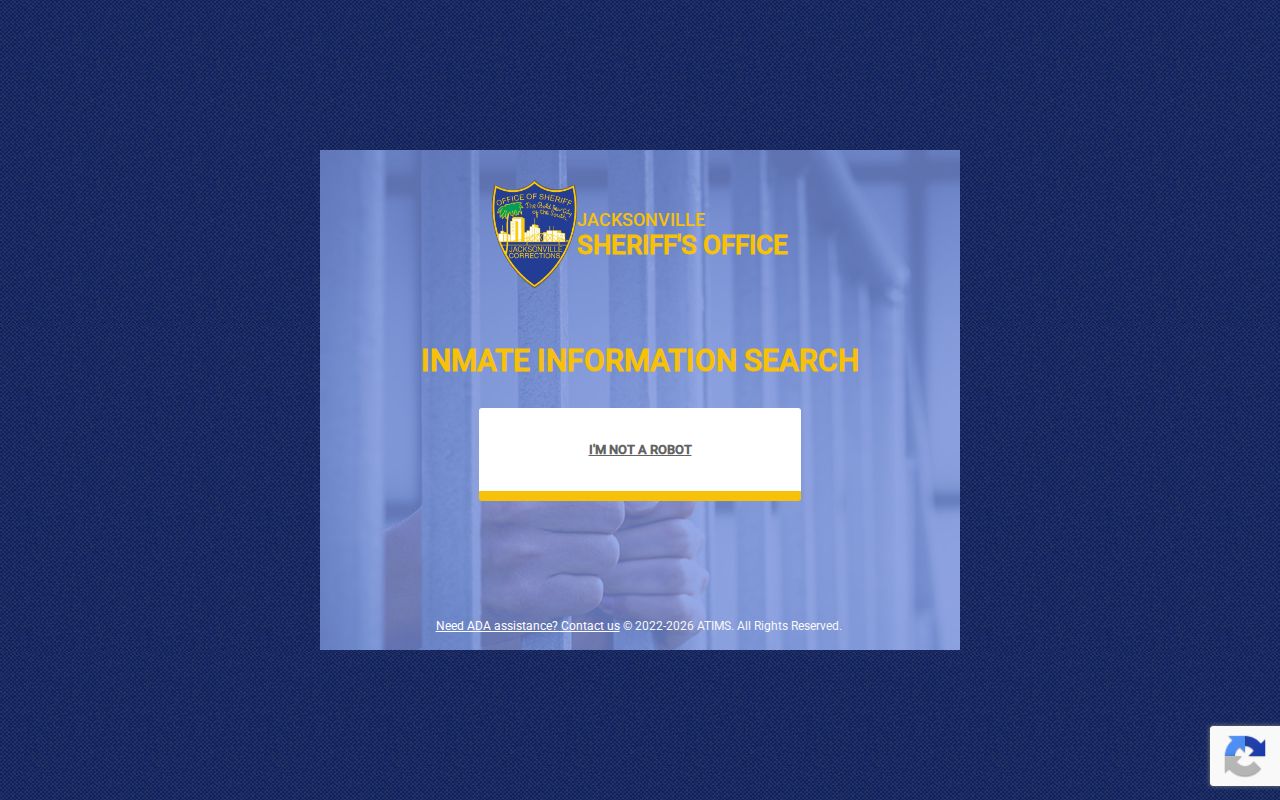
A Jail Number or JSO ID is more dependable than a name-only match across repeated bookings.
Duval County Three-Day Fields
There is no official three-day feed with a fixed set of columns. The JSO historical result and detail instead provide the fields used to decide whether a known booking ended within the period. Keep prospective dates apart from actual events.
| Field | How to read it |
|---|---|
| Inmate Name | A starting match that must be checked against identifiers and booking facts. |
| Jail Number or JSO ID | The strongest local identifiers for separating bookings and same-name people. |
| Custody Status | Displays In Custody or Released with a date in the result interface. |
| Admitted | Shows when the custody episode began, not when it ended. |
| Released | The recorded actual JSO exit used for the 72-hour date comparison. |
| Expected Released Date | A projection that can change and cannot confirm a completed exit. |
| Active Hold Information | A clue that another agency or legal restraint may affect the destination. |
The current detail does not expose a reliable release-reason or destination field on every record. Do not infer the cause from bond information or an empty field. The court order can explain legal authority, while a requested release record can supply the disposition or receiving agency. Those sources complement the actual JSO release date.
Duval Weekend Release Limits
A three-day span often crosses a weekend, but JSO does not publish a weekend or holiday release rule. It also does not promise a set hour, exit door, waiting area, or feed-update schedule. The wider window is useful as a date-review method only. It must not be padded with an assumed midnight release cycle or an invented holiday delay.
Processing time varies at all JSO institutions. Sentenced people housed at Montgomery are transported to Goode for release, while sentenced people at CTC are released from CTC. Court action, identification clearance, property processing, a hold, or transfer arrangements can affect when the actual field changes. Family and support contacts should call the institution before traveling rather than rely on a predicted time.
For a single person's full cross-system path, the Duval County released-inmate lookup distinguishes JSO, FDC, federal, and immigration records. That distinction is vital when a local release date represents transfer rather than return to the community.
Duval Release Record Fallbacks
When no historical result appears, recheck spelling, aliases, and identifiers first. The active-only checkbox is a common cause of a false negative. A portal problem or data delay can also hide a recent status change. Call JSO Jail/Inmate Information at 904-630-5760 for an immediate custody question. Keep the name, Jail Number or JSO ID, admission date, and case number ready.
For a durable answer, use the JSO Public Records route. Ask for the Arrest & Booking record and release record for the exact custody episode, including actual release date and time, recorded release disposition or receiving agency, and any nonexempt booking photograph needed to identify the episode. JSO does not publish a fixed price or response time for this record. Request electronic delivery and ask for an estimate before fees exceed a stated amount.
Use the right agency after a transfer. FDC Inmate Release Information covers state prison and updates nightly. BOP covers federal prison records. ICE's locator focuses on present immigration custody and is not a historical release archive. Florida VINE can send a custody-change notice for a supported record, but an alert is not a certified release record. The source agency remains the final verification path.
The captured JSO public-records page shows the official request channel.
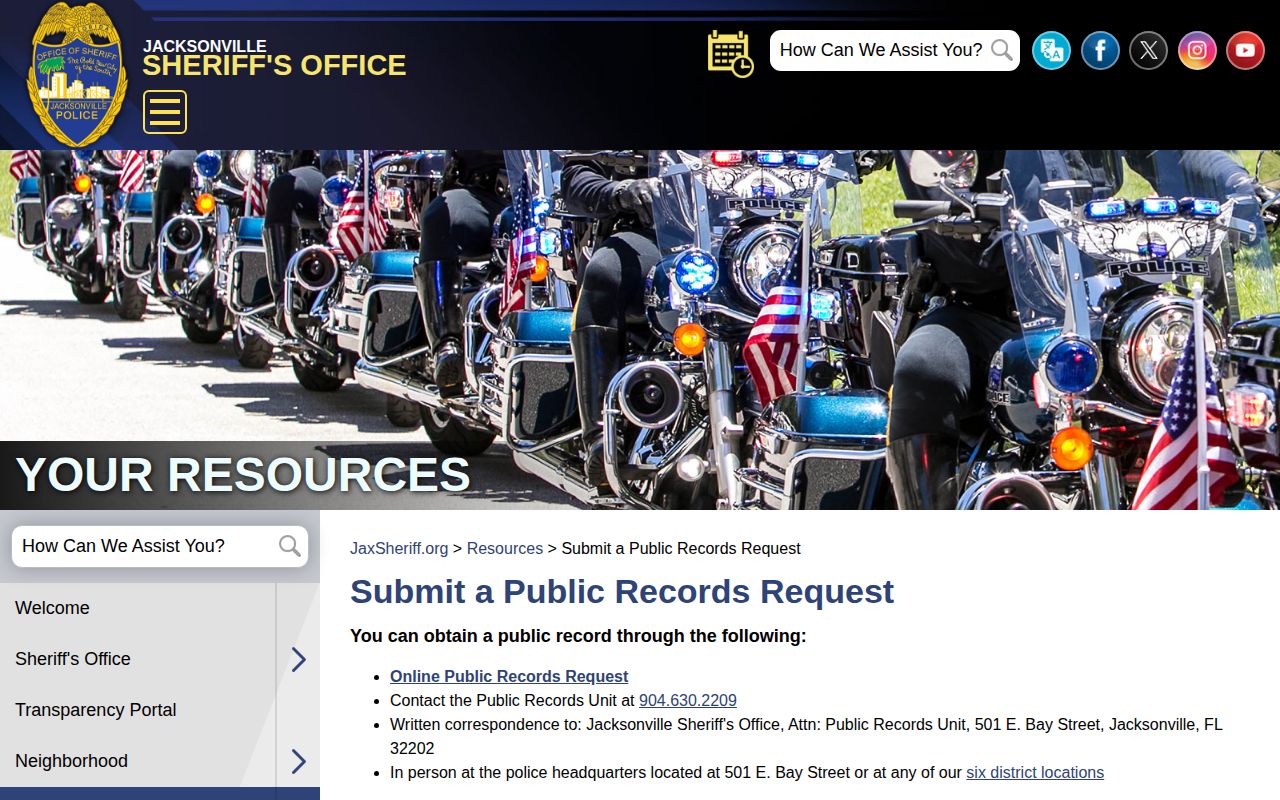
A narrow request tied to one booking reduces identity error and makes the requested release fields clear.
Duval Historical Release Data Quirks
Duval's distinctive search feature is the option to clear Search Only Inmates in Jail. That exposes historical and released matches instead of limiting the result to the live population. A person who no longer appears in the current jail view may therefore remain available as a released booking with a date. This is more useful for a three-day review than the admissions screen.
JSO's Public Reports or In-Sheet screen is about admissions. Its date picker may reach months back, but that range says nothing about historical release retention. The Tentative EOS report looks forward 30 days and identifies possible sentence-end dates. It also does not prove release. The actual Released field must be present before an exit is confirmed.
JSO has not stated a guaranteed retention period or refresh cadence for released bookings. Legacy code references do not create a public release product, and no promoted official inmate mobile app was verified. Official social posts may discuss one notable case, but they do not form a complete Duval County 72-hour release list. State these limits instead of filling the gap with unofficial summaries.
Note: An online omission may reflect identity, access, or timing issues and does not establish that the booking record was destroyed.
Duval Release Dates Across Systems
A three-day check can fail when two systems use similar date labels for different events. In JSO, Admitted and Arrested begin the local custody episode. Expected Released Date and Tentative EOS look forward. Released records the completed local exit. In FDC, Current Release Date may still be prospective for a person who remains incarcerated, while an actual Release Date in the historical record documents departure from state prison. Preserve the exact label and do not shorten each one to release date.
The court record answers another question. A bond order, dismissed charge, sentence, or time-served credit may explain the legal authority for an exit, but it does not show the minute JSO finished processing. Likewise, a case can remain open after physical release. Compare the case number and booking identifiers before using a docket event to explain the jail record.
Receiving custody must be checked separately. An active hold, detainer, state commitment, or transfer notation can mean the person left Duval County's local population and entered another agency's custody. Search FDC for a state commitment, BOP for a federal prison term, or the named county or immigration authority when the record supplies that lead. Never translate transfer into went home.
- Actual release
- A recorded historical exit from the specific custody system.
- Projected release
- A date expected to end custody that remains subject to change.
- Transfer
- Movement from one agency or institution to another, not a community release.
- Detainer
- A request or legal hold from another authority that can affect where a person goes next.
This date classification keeps the 72-hour review factual. It also explains why an admission report, a Tentative EOS row, and a court order cannot substitute for the actual Released field.