
Duval County Release Records
A release record marks the end of one custody episode. It does not always mean that the person went home. The Jacksonville Sheriff's Office, or JSO, operates three adult county institutions with different roles. John E. Goode is the intake jail. Montgomery is a county correctional center, despite the word “correctional” in its name. The Community Transition Center, or CTC, serves county-sentenced people in work-furlough, treatment, and inmate-worker roles. All three use the JSO inmate-information system.
A person may leave after bond, a pretrial order, dismissal, time served, sentence completion, or another court order. A transfer can also close the JSO booking. Someone delivered to the Florida Department of Corrections, another jail, federal authority, or immigration custody has left the local building but has not been released to the community. The historical booking, court docket, and receiving system must be read together when the destination is unclear.
Release means physical custody ended in the system being checked. Discharge can mean that a sentence or supervision term ended. Time served means days already spent in custody satisfied the ordered jail term. A detainer is another authority's request or legal basis to hold or receive the person.
How Duval Inmates Leave Custody
The recorded manner of exit determines the next lookup. JSO's public detail may show bond fields, an actual Released date, an Expected Released Date, and Active Hold Information. Those fields are not interchangeable. A bond entry may show that a path out exists, while the Released field shows that local processing finished. An expected date is only a forecast. An active hold warns that another authority may be involved, but it does not identify a final destination in every case.
| Exit path | What it means | Next official check |
|---|---|---|
| Bond or pretrial order | The court authorized release while the case may remain open. | JSO Released field, then Duval CORE and the Pre-Trial Release Register. |
| Time served or sentence end | The local term and counted days in custody reached its end. | JSO history plus the signed judgment or sentence. |
| Transfer to FDC | County custody ended and state prison custody began. | FDC current population, then FDC release information later. |
| Other agency transfer | Another county, federal, or immigration authority may receive the person. | The named receiving agency, BOP, ICE, or the relevant court file. |
| Community release | The person left confinement but may still have supervision. | JSO or FDC release history, then the correct supervision search. |
Never treat a blank destination as proof that a person returned home. The exact JSO wording controls. If the online detail lacks a release manner or receiving-agency field, request the release disposition from the JSO Public Records Unit.
Duval Release Record Fields
A reliable match answers who was held, which booking is at issue, when it ended, and what happened next. Names can repeat. One person can also have several Duval bookings. Use the Jail Number or JSO ID, ten-digit booking number when available, booking date, charges, case number, and facility to isolate the right event. Read each date by its displayed label.
| Field | What it shows |
|---|---|
| Name and identifiers | The person and the specific JSO record. Compare more than name alone. |
| Admitted or Arrested | The start of the local custody episode, not the release. |
| Facility placement | Where JSO placed the person while the record was active. |
| Charge and case number | The court matter linked to the booking and the route into CORE. |
| Expected Released Date | A prospective local date that can change. |
| Released | The actual date JSO records for the end of that booking. |
| Active Hold Information | A warning that another authority may affect the exit or destination. |
JSO describes its search as covering both current and historical incarcerated and released people. It does not publish a guaranteed online retention period for each booking or photo. A missing old result is not proof that the record was destroyed.
Request Duval Release Records
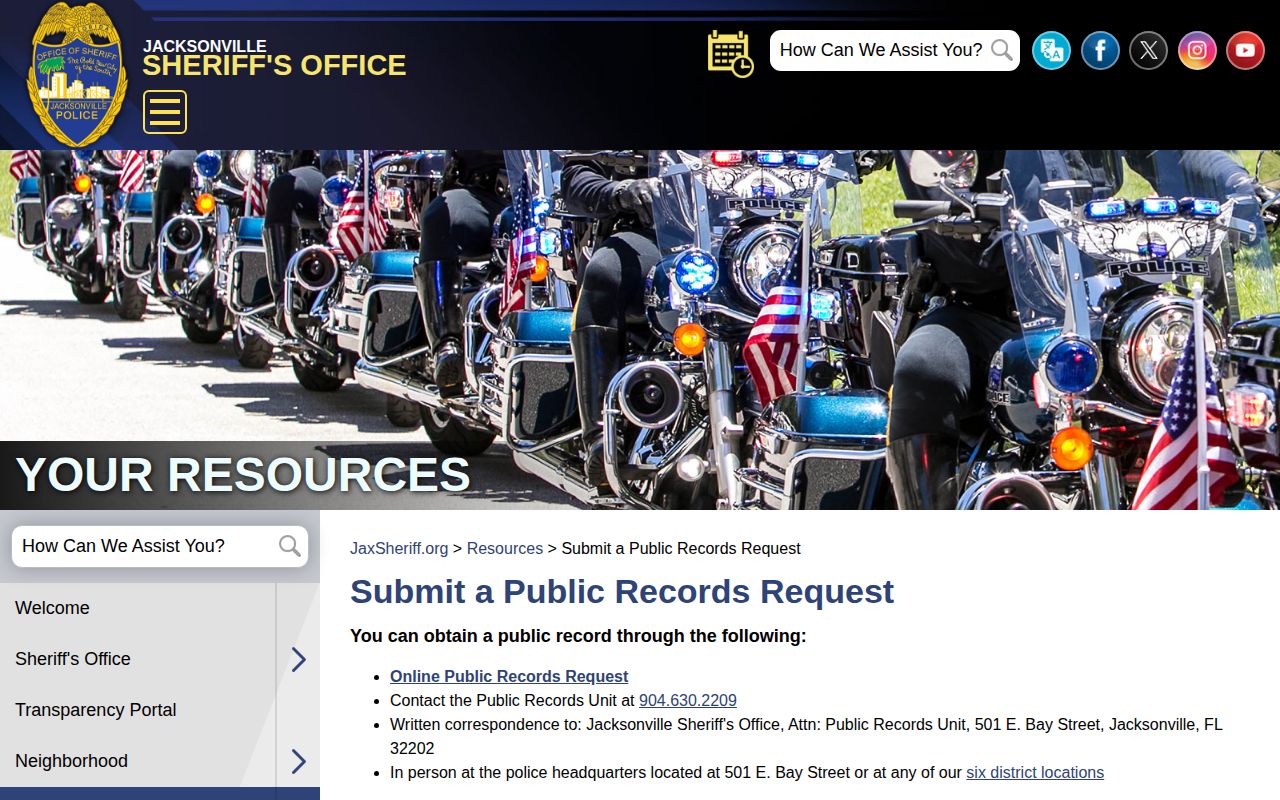
When the online detail is missing, unclear, or in conflict with another source, make a narrow request to JSO. The JSO Public Records page accepts online requests and links to its request portal. Requests may also be made by telephone at 904-630-2209, by mail to Jacksonville Sheriff's Office, Attn: Public Records Unit, 501 E. Bay Street, Jacksonville, FL 32202, or in person at headquarters or district offices.
- Give the full legal name, JSO ID or Jail Number, booking or admission date, and a narrow date range.
- Ask for the Arrest & Booking record and the actual release date, time, recorded manner, and receiving agency or destination field.
- Request the booking photograph only if it is needed to match the custody episode. Ask for an electronic copy.
- State a fee limit and ask for an estimate before charges exceed it. If part is exempt, ask for the nonexempt remainder and the cited exemption.
Florida Chapter 119 permits authorized copy charges and a special service charge when a request takes extensive staff or technology resources. JSO does not state a fixed price for every release record or booking photo, and the law does not promise a set response in a fixed number of hours. A focused request can reduce both review time and cost.
The manifest-captured official request route shows where the records process begins.
Confirm Duval Bond Releases
Bond payment is handled through the Goode public lobby. JREC's Pre-Trial Services line is 904-630-8623. Payment or a judge's pretrial order creates legal authority for release, but it does not prove that identity checks, holds, paperwork, and physical release processing are complete. The JSO Released field is the county's confirmation that the booking ended.
After release, the Duval Clerk's Pre-Trial Release Register can show charges, required appearances, failures to appear, warrants, noncompliance, or a revocation recommendation. JSO prepares that register and the Clerk posts it. It is a post-jail case-management source, not an hourly release timestamp. Pair it with the actual JSO release date.
Find Duval County Released Inmates
Start with the last known custodian. A county booking belongs in JSO history. A Florida prison sentence belongs in FDC. A federal sentence belongs in BOP. An immigration transfer belongs in ICE's present-location process. This prevents the most common false result: searching the current county roster after the person moved to another system.
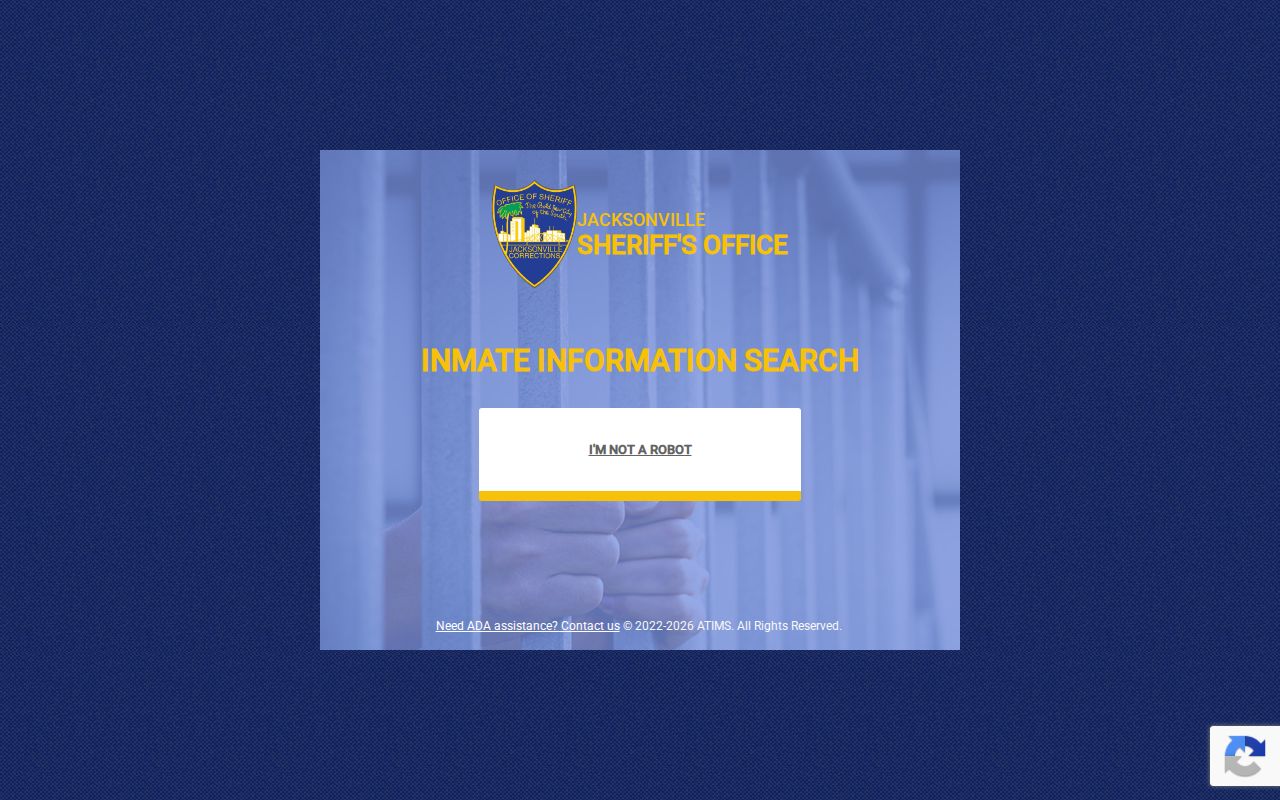
- Open the JSO Search by Name. Complete the ordinary verification step and clear “Search Only Inmates in Jail” so historical matches can appear.
- Search by Jail Number or JSO ID when known. Otherwise match name, age, booking date, charges, facility, and case number.
- Open the correct booking. Read Custody Status and the actual Released field, not Expected Released Date or a next-court date.
- Check Duval CORE for the bond order, dismissal, sentence, time-served calculation, probation order, or other legal event.
- If the record shows a transfer or hold, follow the named authority. Use FDC, BOP, ICE, another county, or the relevant court file.
- If the sources conflict, call Jail/Inmate Information at 904-630-5760 or request the release record with the identifiers and date range.
JSO does not currently expose a verified distinct 24-hour or 72-hour release page. The Public Reports screen is an admissions report. The Tentative EOS Report predicts possible sentence-end events in the next 30 days. Neither is proof that someone already left. For the feed-specific fallback, see Released Last 24 Hours.
The captured official form shows the key Duval setting: the active-only box must be cleared to include released results.
Search Duval State Release Records
Use the Florida Department of Corrections Corrections Offender Network for a person sentenced to state prison. Its menu separates current prison population, Inmate Release Information, current supervised population, and absconders. The released-first database includes people already released and people scheduled for release, and FDC says it updates nightly. It does not cover an ordinary Duval jail release or county-only supervision.
Search by DC number when possible. Otherwise use first and last name, then compare birth date, race, sex, aliases, photograph, county, case number, offense history, and prison history. A released detail can show release date, incarceration dates, detainers, sentence data, county cases, and a state photograph. For a current prisoner, “Current Release Date” is still a projection. FDC warns it can change because of gain-time awards, forfeiture, or review. “TO BE SET” means the date is pending review.
- DC number
- The stable state corrections identifier and strongest FDC search key.
- Release Date
- The historical state-prison exit date when shown on a released record.
- Current Release Date
- A prospective date for a person who is still incarcerated or scheduled for release.
- Supervised Population
- A separate record of current FDC community supervision after prison or under a felony court order.
After an actual state release, search the supervised population. Release from prison may begin parole, conditional release, probation, or another supervision term. For disputed release data, FDC lists 850-488-9167 and dc.release@fdc.myflorida.com. Use the DC number and identify the exact field in question. For a forecast rather than a completed event, the Duval County inmate release date page explains the local and state labels.
Why Duval Releases Leave Rosters
A live roster answers who is in custody now. Once JSO records the booking as released, the person should no longer be treated as part of the active population. That change is expected. It is why the “Search Only Inmates in Jail” filter can hide the record that matters most.
Disappearance alone is weak evidence. Maintenance, identity correction, medical movement, court transport, data lag, or a transfer can also change what appears. The better proof is a booking-level Released date matched to the right identifiers. If there is an Active Hold or transfer note, check the receiving authority before describing the event as a return to the community.
Duval Release Times and Pickup
JSO publishes no guaranteed release hour, weekend schedule, holiday rule, physical exit door, or family waiting area. It says release times vary at all institutions. Identification clearance and the rest of release processing must finish first. Readers should not rely on a midnight-release assumption or travel based only on an expected date.
Call the releasing institution before leaving. Jail/Inmate Information for Goode is 904-630-5760. Montgomery-sentenced people are transported to the jail for release, while CTC-sentenced people are released from CTC. Goode and Montgomery public lobbies limit post-release property pickup to money and keys. Those operational facts help plan a pickup, but the current status still controls.
Trace Duval Releases in Court
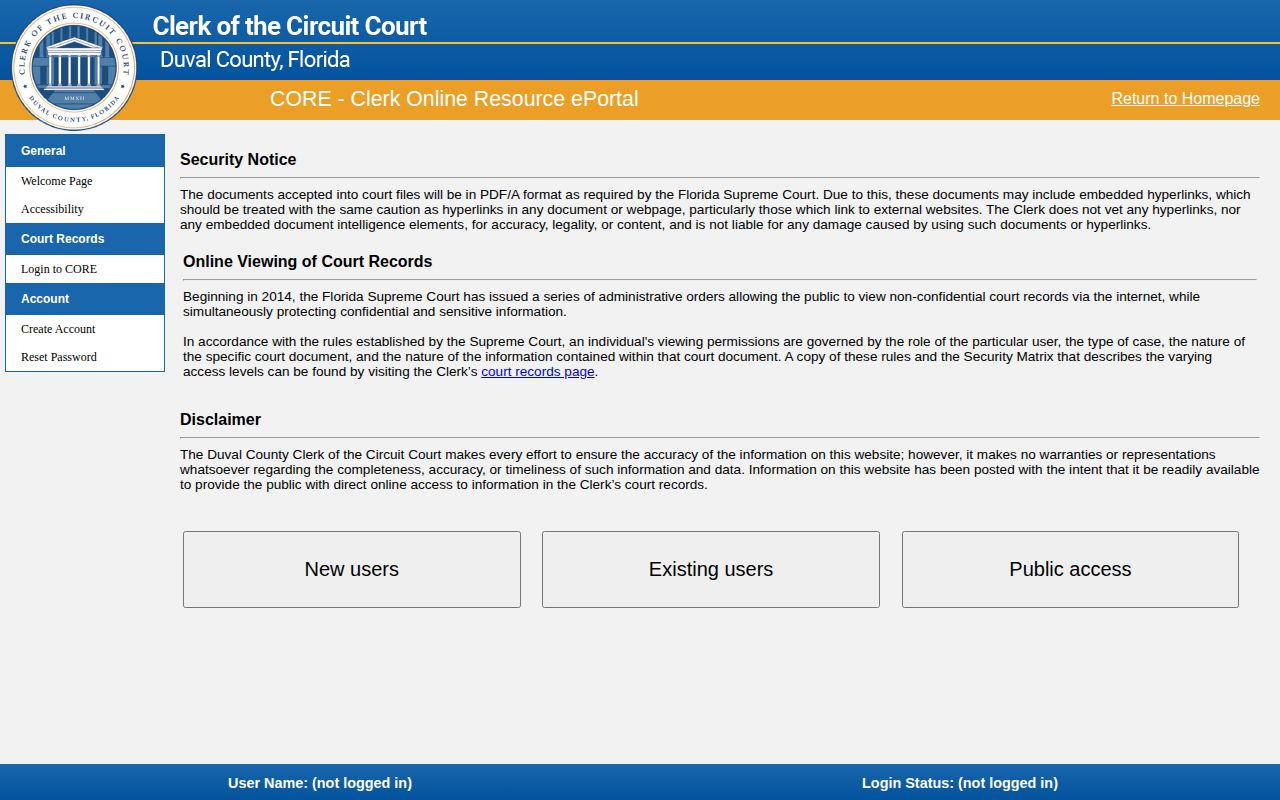
The Duval CORE system can keep the case trail after a person drops from the active jail view. Match the case number from JSO. Then look for bond, first appearance, dismissal, plea, adjudication, judgment, sentence, days counted from prior custody, time served, probation, violation warrants, and termination events. A pending case after release is normal in a pretrial matter.
A docket label is only an index entry. Open the document image or request the signed order when exact terms matter. CORE explains why a court authorized the change, while the JSO Released field records when local processing ended. The Pre-Trial Release Register adds required appearances and compliance data for accepted defendants, but it does not replace either source.
The manifest image below shows the official court search channel used to connect a Duval booking to its case.
Duval Release Reentry Help
The Jacksonville Re-Entry Center, or JREC, is Duval's navigation hub for people returning from local and state incarceration. It is not a detention site and cannot prove a release. JSO's fiscal-year 2023-24 report says JREC counselors worked with FDC releasing officers and visited Goode, Montgomery, and CTC.
The JSO corrections annual report records 8,962 bus passes and 260 purchases of Florida identification cards, driver licenses, or birth certificates for clients. These are dated program totals, not a promise that each person will receive the same help. JREC is at 1024 Superior Street, Jacksonville, and its main line is 904-630-8600. First confirm release through JSO or FDC, then use JREC for service navigation.
Duval Release Property and IDs
Property questions depend on the institution. JSO limits public-lobby pickup at Goode and Montgomery to money and keys. Montgomery's property room is 904-630-8869. Because no broader online pickup policy was verified, call before travel and ask about the specific property type and the current release location.
JREC's documented identity work provides a local path for people who need a Florida ID, driver license, or birth certificate after release. An immediate custody-status error should go to Jail/Inmate Information at 904-630-5760. A documented error in a stored record belongs with the JSO Public Records Unit. No separate JSO online correction form was verified.
Check Duval Release Supervision
Physical release and supervision are separate questions. FDC officers supervise people under state felony probation, parole, conditional release, community control, and other state categories. The FDC Supervised Population search can show an active record and the responsible circuit or office. “Active Suspense” may mean the person is temporarily unavailable for direct supervision, often due to confinement. It is not the same as a routine active community status. “Absconder” means the person is unavailable for supervision and a violation warrant has issued.
Duval belongs to FDC Circuit 4 in Region 2. The Jacksonville Circuit Office serves Duval, Clay, and Nassau Counties at 921 N. Davis Street, Building B, Suite 235, Jacksonville, FL 32209; 904-924-6847; jacksonville.cir@fdc.myflorida.com. FCOR makes parole and certain statutory release decisions, while FDC carries out community supervision. A scheduled FCOR hearing is not a final release ruling. The Commission's final order, the FDC prison record, and the supervised-population entry answer different parts of the status.
County misdemeanor probation follows a separate local route and may not appear in FDC. JSO identifies Professional Probation Services for that work. Electronic monitoring is another distinct Duval channel. A person ordered to monitoring must report for orientation within 48 hours after release, but that rule does not apply to every released person. The JSO Electronic Monitoring Unit is 904-630-2859.
Duval Release Alerts and Registry
Florida Statewide VINE provides custody-status information and notifications about a specific person when the holding agency participates. Search an exact name or available booking or offender identifier, confirm the agency and identity, and read the status with its last update. A released or out-of-custody alert means the source feed reported a change. It is not a certified release record, and a transfer alert does not always mean a return to the community.
If VINE returns no match, try the source identifier in JSO or FDC. VINE is a notice channel, not a complete historical Duval ledger. After an alert, confirm the actual event in JSO history, FDC release information, the court order, or the agency record. That source-level check also guards against same-name errors and feed delays.
The FDLE registry search has a narrow status called “Released - Subject to Registration” for people who meet Florida registration law. It can confirm that a qualifying registrant is no longer confined or under the listed supervision or court sanctions while registration continues. It does not cover the general Duval released population and must not be used as a substitute for JSO or FDC.
Duval Federal Release Checks
Goode may house federal detainees even though Duval County has no verified standalone BOP prison or dedicated ICE detention facility. A federal detainee leaving Goode may return to U.S. Marshals custody, enter BOP after sentence, move to another site, or be released by a federal court. The local exit alone does not settle federal status.
Use the BOP Inmate Locator for federal records from 1982 forward. A past release date with no facility, or “Released” or “Not in BOP Custody,” confirms only the end of BOP custody. For immigration custody, ICE's locator is mainly a current-location tool. No result may reflect release, transfer, new processing, a data mismatch, protected status, or custody elsewhere. USMS has no general public historical release roster, so use the federal court docket or an agency records request when needed.
No current primary source established a blanket JSO and ICE contract. Do not turn the word “federal” or a generic hold into an ICE claim. Follow the named agency and the court record.
Compare Duval Release Status Sources
Each system answers a narrow question. Match the source to the custody phase, preserve its exact label, and note when it was checked. A court order can authorize release before physical processing ends. VINE can signal a change before a certified record is available. Neither fact makes the sources inconsistent.
| Source | Still in custody | Released or later phase |
|---|---|---|
| JSO inmate search | “In Custody” in the local booking. | Historical result with “Released” and a date. |
| FDC network | Current inmate population and a prospective release date. | Inmate Release Information, then Supervised Population if applicable. |
| Duval CORE | Orders and docket events may explain custody. | Disposition, sentence, probation, and termination events explain the legal path. |
| BOP locator | Federal facility and projected date. | Past date with Released or no BOP location. |
| Florida VINE | Participating agency custody status. | A release alert or out-of-custody status that must be checked at the source. |
Duval Release Sites Still Control
Jacksonville City Council studied the future of the downtown jail and other primary facilities after finding that existing sites had exceeded their useful life. The committee considered relocation, cost, health care, and operations. That planning history does not prove a new jail opened or that a release point moved.
Current JSO addresses and instructions remain controlling until the agency publishes a change. Confirm the institution and status before travel. This matters most for Montgomery, whose sentenced inmates are taken to Goode for release, and CTC, whose sentenced residents leave from CTC.
Seal Duval Release Records
Florida sealing and expunction can limit ordinary public access to qualifying arrest and case material. Expunction means that access to a qualifying record is more tightly restricted after a court order. Sealing generally hides a qualifying record from ordinary public view while authorized agencies retain lawful access. Eligibility is fact-specific, and dismissal alone does not guarantee either result.
Duval Clerk provides a local seal-and-expunge forms page tied to the Florida Department of Law Enforcement certificate process. Applicable court supervision must have ended. FDLE automatic sealing of state criminal-history material does not by itself seal every local court or agency record. Obtain needed public arrest reports, dispositions, and orders before access changes, then follow the FDLE and court process under sections 943.0585 and 943.059, Florida Statutes.
Duval County Release Facility Paths
Facility names do not all mean the same type of custody. Use the path tied to the actual operator and resident status.
- John E. Goode Pretrial Detention Facility: JSO intake jail and primary historical-release path.
- Montgomery Correctional Center: JSO county institution whose sentenced residents are taken to Goode for release.
- Community Transition Center: JSO county facility where sentenced residents are released on site.
- Duval Regional Juvenile Detention Center: restricted youth records, outside the adult JSO workflow.
- Jacksonville Bridge / Bridges of Jacksonville: community placement remains FDC custody until the state records release.
- Jacksonville Re-Entry Center: service navigation after local or state custody, not a holding site or release record.
A departure from Jacksonville Bridge is not proof of FDC discharge. A visit to JREC is not proof of any custody event. Juvenile release information normally requires an authorized representative, counsel, DJJ, or juvenile court rather than an adult public search.